

 Being tired and unable to sleep can be frustrating. Good ole caffeine doesn’t cut it on some days when sleep is elusive. Most Adrenal Fatigue sufferers feel tired throughout the day and are ready for sleep long before 9 p.m. Unfortunately, many cannot fall asleep even when exhaustion is overwhelming, because of a stress-filled day. This stops the body from calming down enough to fall asleep. Feeling trapped, wide awake, can leave you considering sleeping pills to help. But before you go that route, find out why you’re tired but can’t sleep, and then try a few of these strategies to train your body to sleep better.

Reasons You Can’t Fall Asleep Even Though You’re Tired
For many people, the body functions at an optimal level with a certain amount of sleep. Sleep deprivation can throw your body off balance and the result can be you being tired but can’t sleep. Some possible reasons include the following:
Stress
According to research, today, more than ever, stress levels are extremely high. Your body responds to stress by releasing hormones that trigger a “fight or flight” response. Heart rate, breathing rate, and blood pressure all increase. Additionally, the body releases an increased level of the stress hormone cortisol. A cortisol spike can give you a feeling of hyperawareness when under stress or when facing threatening situations. However, elevated levels of cortisol can prove problematic when it’s time to go to bed. This hyperalert feeling can make it more challenging for you to sleep, even when you are overtired and need to rest.
Anxiety
Another barrier to sleep is anxiety, which is also stressful. Many people who have anxiety conditions, such as panic disorder, typically are in a mode of mental hyperarousal. They contemplate their past and catastrophize about the future. Nighttime anxiety is especially disruptive since it throws your circadian rhythm off balance. This is your body’s 24-hour internal biological clock.
Your body, by default, secretes cortisol during the daytime. Not long after waking, your body’s cortisol levels climb, but they gradually drop during the evening. Nighttime anxiety, coupled with stress upsets the balance of your circadian rhythm. Consequently, this causes a nighttime spike in cortisol instead of a decline, necessary for the production of the sleep hormone melatonin. Furthermore, this change keeps you in a state of stimulation and alertness. As such, this could be a reason you feel tired but can’t sleep.
Hormonal Fluctuations
Women especially, experience hormone changes. If you are a woman, this could be the culprit behind why you feel tired but can’t sleep when it’s bedtime. Hormone fluctuations that occur just before your period can decrease REM (rapid eye movement) sleep. Also, it can cause melatonin production to drop, and consequently mood changes. Additionally, hormone changes can lead to painful menstrual cramps and migraines, as well as an increase in body temperature. All these changes can play a role in increased nighttime arousal, as well as difficulties falling asleep.
Caffeine Consumption
 Too much caffeine can work against you, even if it helps in the short term. You may get through the day, but it may be the reason you stay up at night. Caffeine is a stimulant that can extend sleep latency, which is the time it takes you to fall asleep. It reduces sleep efficiency and total sleep time and worsens sleep quality. Research suggests that caffeine reduces total sleep time by 45 min and sleep efficiency by 7%, with an increase in sleep onset latency of 9 min and wake-after-sleep onset of 12 min (1). Also, if you consume caffeine past midday, it can remain in your system up to bedtime. This may result in you feeling tired but ‘wired’ and subsequently unable to sleep.
Disrupted Sleep-Wake Cycle
Your circadian rhythm refers to your body’s internal clock, which plays a role in helping to signal when it’s time for your body to transition into sleep and when to wake up. This happens through your body’s 24-hour sleep-wake cycle. However, your sleep-wake cycle can go out of whack for several reasons, such as working late night shifts. It can become not only harder to sleep when this cycle is imbalanced, but also to stay asleep without disruptions. It’s worth paying attention to your circadian rhythm.
Poor Sleep Hygiene
Your sleep habits may have a significant impact on your ability to get a good night’s sleep, even when you are overtired or have slept well the previous night. Sleep hygiene involves healthy habits and environmental factors that can help prepare you to have the best quality sleep you can. This includes such habits as sticking to your regular sleep schedule, establishing a calming nighttime routine, ensuring that your bedroom is a relaxing environment, and staying away from certain foods and beverages the closer you get to bedtime.
Poor sleep hygiene is evident in several ways, including having trouble falling or staying asleep, interrupted sleep, or daytime sleepiness. Additionally, classic signs of poor sleep hygiene are regularly lacking consistency in both your sleep quality and schedule. If you are tired but can’t sleep, this could be the issue.
Electronic Devices
Light and darkness signals play a role in the regulation of your circadian rhythm. Light is when you are active, and darkness is when you rest. However, the use of electronic devices, such as smartphones or computers, close to your bedtime can throw your body’s internal clock off balance. This is because the blue light emitted from the screens of these devices has a wavelength that may influence this system and lead to bad sleep (2).
Specifically, it inhibits the production of the sleep hormone melatonin. The blue light fools your brain into thinking it is daytime and should be awake. As a result, the body stops releasing melatonin, the hormone responsible for helping you wind down and get ready for bed. With melatonin production stopped, the blue light makes you feel energized rather than tired and sleepy as you should be. If you are tired but can’t sleep, blue light exposure from electronic devices could be affecting your sleep quality.
Insomnia
 Insomnia involves having difficulty falling asleep, staying asleep throughout the night, or poor sleep quality (3). It can be acute insomnia, lasting for a couple of weeks or days, or chronic insomnia, persisting for up to three months. Insomnia can have many causes. Worse, with insomnia, sufferers are often stuck in a cycle of sleeplessness and anxiety. This can stem from developing negative associations with the bed and the bedroom from night after night of struggling to sleep. This reaction leads to wakefulness and not rest. As such, sufferers often experience feeling tired but can’t sleep.
Adrenal Fatigue and Wired and Tired
Adrenal Fatigue sufferers sometimes feel wired and tired; they can have what is known as sympathetic overtone, preventing them from falling asleep. With Adrenal Fatigue, the body is unable to keep up with long-term stress, causing various nonspecific symptoms like fatigue, anxiety, the inability to fall asleep despite being tired, feeling wired and unable to relax, panic attacks, and foggy thinking. A lack of sleep is an Adrenal Fatigue trigger and the inability to sleep is a symptom of a Neuroaffect Circuit imbalance.
Chronic stress stimulates the body to make more of the stress hormone cortisol, but excess levels of cortisol in the body can make you feel restless. That’s the intention, since cortisol is meant to keep you alert and awake. This is what is needed in a “fight or flight” situation. However, it is bad when the cause of your stress is work-related, and you simply need some rest. It is best to address the root cause of your stress to start experiencing better sleep quality.
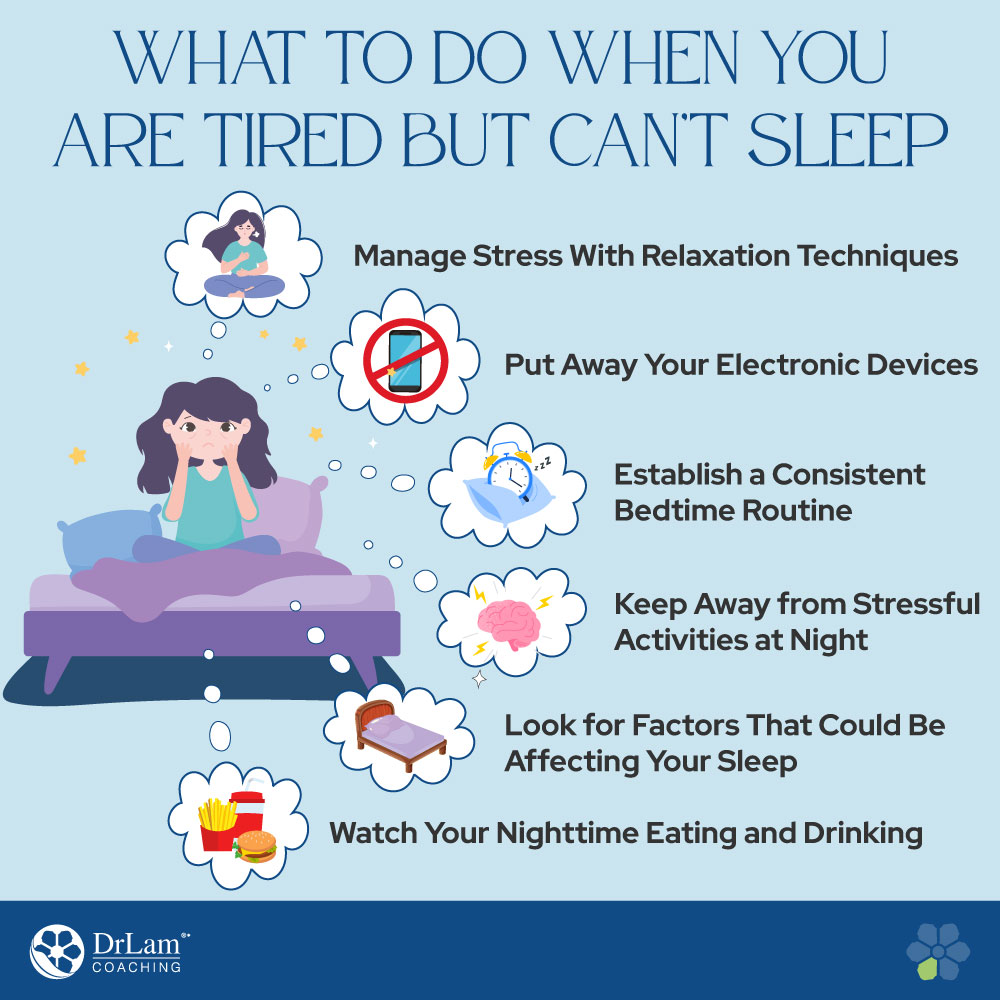
What to Do When You Are Tired but Can’t Sleep
You cannot find a substitute for good sleep because of its important function in the maintenance of good health, mentally and physically. If you’re tired but can’t sleep at night, focus on healthy sleep habits and effective stress management. Check out these tips to help you achieve better sleep.
Manage Stress With Relaxation Techniques
A restful night can come about by managing your daily stress levels. To deal with stress efficiently, you can practice deep breathing exercises, progressive muscle relaxation (PMR), journaling, yoga, meditation, and exercise.
Put Away Your Electronic Devices
To keep your body’s internal clock balanced, limit blue light exposure before bed. This will put you in a good position to doze off as your body calms and relaxes naturally. Opt for tech-free ways to relax before bed, such as reading, a cup of tea, or a warm shower or bath.
Establish a Consistent Bedtime Routine
When you create and stick to a consistent sleep schedule and nighttime routine, you help to realign your sleep-wake cycle. This makes it easier to fall asleep. Try to not only go to bed at the same time every day but to wake up at the same time as well, including on weekends.
Keep Away from Stressful Activities at Night
Avoid stressful situations at night to avoid disrupting the sleep-wake cycle. Remember that the “fight or flight” response increases alertness, and keeps you awake when exhausted. Prioritize stress management. As such, actively avoid stress-triggering conversations, for instance, or avoid strenuous activities leading up to your bedtime. This is a simple yet helpful approach to winding down.
Look for Factors That Could Be Affecting Your Sleep
 When you often feel tired but can’t sleep, hidden factors could be causing problems in some instances. Reassess your lifestyle, personal preferences, and environment, which can all affect your sleep quality. Look at your sleep environment and habits, and check to see if they are keeping you up, even when overtired. For instance, maybe it’s your worn mattress that you need to throw out and replace to experience better sleep.
Watch Your Nighttime Eating and Drinking
Do not eat heavy, large meals close to your bedtime, and avoid beverages containing caffeine or alcohol. Also, keep away from foods that trigger heartburn, which can make it more difficult to fall asleep. Furthermore, keep in mind that drinking too much fluids right before bed may result in frequent trips to the bathroom to urinate, causing nighttime interruptions. Instead, try to drink more earlier in the day and less near to bedtime.
The Takeaway
If you are tired but can’t sleep, it may be due to several factors, like anxiety and hormones. You may need to become proactive if you want to achieve better quality sleep. This is especially true for Adrenal Fatigue sufferers who are often wired and tired. If everyday remedies don’t help you get better sleep, reach out to us and try Dr Lam’s Adrenal Fatigue Recovery Program, which can put you on a path to restored wellness through individualized care.