

“Gluten intolerance” is a term that is being used more and more often, and it is a problem that many struggle with. This article will explore gluten intolerance, what symptoms to look out for, and what you can do about it.
What Is Gluten?
 Gluten is a protein that is found primarily in certain grains such as:
- Wheat
- Barley
- Rye
It is comprised of two proteins, gliadin and glutenin. Gluten has a stretchy quality to it that is used to make bread, pasta, and other baked goods stick together. While gluten is found naturally in grains, it can also be added to foods during food processing.
What Is A Gluten Intolerance?
A gluten intolerance, also known as gluten sensitivity, occurs in four different conditions. These are (1):
- Celiac disease
- Non-celiac gluten sensitivity (NCGS)
- Dermatitis herpetiformis (DH)
- Gluten ataxia
When you consume gluten, it is broken down into gliadin and glutenin by enzymes such as endopeptidases and proteases (2). Once broken down, the proteins reach your gut-associated lymphoid tissue, also known as GALT. This tissue lies throughout your intestine.
If you have NCGS, your GALT will attack the proteins by producing antibodies. In the case of celiac disease, your GALT will attack the proteins as well as the enzymes responsible for breaking it down. This will also produce antibodies, although they are different compared to NCGS.
Dermatitis herpetiformis occurs when the antibodies produced in response to gluten cause itchy bumps and blisters on your skin. Gluten ataxia occurs when the antibodies produced by your body’s response to gluten attack the cerebellum in your brain, causing problems with motor control, balance, and muscle tone. These two conditions often also occur with other forms of gluten intolerance.
Is Gluten Intolerance an Allergy?
It is important to point out that gluten intolerance is NOT a gluten allergy.
An allergy is an immune response that generally occurs shortly after consuming the foods and results in symptoms that can require emergency medical care. In some cases, it can even be fatal.
A wheat allergy is also different from a gluten intolerance. A wheat allergy is an immune response to the protein in wheat. Wheat and gluten can become easily confused, as all wheat products contain gluten. However, not all gluten products contain wheat. Individuals with a wheat allergy will still be able to consume gluten-containing products provided that they do not contain wheat. However, it’s probably recommended that those with wheat allergy also stay away from gluten because there could be the possibility of cross-reacting.
Symptoms of Gluten Intolerance
There are many different symptoms of gluten intolerance. These include (3):
- Abdominal pain
- Bloating
- Constipation
- Diarrhea
- Brain fog
- Fatigue
- Headaches
- Skin rashes or eczema
- Joint or muscle pain
Testing for Gluten Intolerance
If you are presenting with symptoms that may be gluten intolerance, going to a healthcare provider can help to determine the underlying cause. In some cases, tests may be done to rule out other causes such as celiac disease and wheat allergies.
One test that can help to determine if it is a gluten intolerance is testing for the IgG and IgA antibodies. These antibodies can be used as a marker for gluten intolerance.
Additionally, an elimination diet can also be used. The elimination diet consists of excluding gluten from your diet for at least six weeks. In these six weeks, keeping a diary to track symptoms can help to determine whether or not your symptoms are reducing. After six weeks, gluten-containing foods can be slowly reintroduced back into the diet and symptoms can be noted. If your symptoms reduce during the six weeks and return after reintroducing gluten, you may be experiencing a gluten intolerance. If symptoms continue without the gluten and don’t reduce, it may be another cause.
Gluten and The Gut
 Consuming gluten if you have a gluten intolerance may not seem to be a big deal, especially if the symptoms are mild. However, apart from the symptoms, gluten can harm your gut.
In your gut, along with enzymes that assist digestion, there are also finger-like projections called microvilli. These microvilli play an important role in absorbing the different nutrients and are maintained by your enzymes. If the enzymes are attacked as a result of the gluten, the microvilli can become damaged, resulting in a leaky gut.
This can cause your gut wall to become more permeable and can result in toxins and antibodies leaving your gut and entering your bloodstream. These antibodies may travel to another organ such as your skin and then start to attack there, causing an autoimmune condition. Additionally, a leaky gut can also cause joint pain, headaches, and tiredness.
Eliminating gluten from your diet if you are intolerant to it can help prevent further damage to your gut and immune system.
What Causes Gluten Intolerance?
Anyone can experience gluten intolerance, but it is more common in women than in men. There are a few potential causes for gluten intolerance, including:
- Sensitivity to carbohydrates: This can result in carbohydrates not being digested properly and fermenting in the gut, resulting in symptoms.
- A diet low in gluten followed by a diet high in gluten: During a diet low in gluten, your gut adapts to the food you eat and can cause the enzymes responsible for digesting gluten to reduce. This can cause a gluten intolerance for a short period as your gut adapts.
- Stress.
The Link Between Stress and Gluten Intolerance
Stress is another factor that can cause gluten intolerance. The body is better able to handle short-term stress than long-term stress. To cope with stress, your body uses the NeuroEndoMetabolic (NEM) Stress Response System, a six-circuit system of related organs. One of the roles of this system is to stimulate your adrenal glands to produce stress hormones such as adrenaline and cortisol to help your body in times of stress. When the stress clears, the stress hormones will be reduced. However, in the case of long-term stress, your body will continue to produce stress hormones.
Over time, this can cause your adrenal glands to become depleted of cortisol, causing low levels. This can start to cause imbalances within the NEM system and can begin the onset of adrenal fatigue. This is a condition where the body is unable to keep up with long-term stress. Symptoms of adrenal fatigue will depend on where the imbalance is occurring in the NEM system.
One of the circuits in this system is the Inflammation circuit, which is responsible for regulating inflammation in your body through the immune system, gastrointestinal tract, and gut microbiome. An imbalance in this circuit can cause inflammation to increase in your body and can also cause health problems in the related systems. This can increase the occurrence of food sensitivities, such as those to gluten, and can also cause irritable bowel syndrome (IBS). Food sensitivities such as gluten intolerance can, in turn, further increase inflammation if gluten is consumed consistently, resulting in a vicious cycle.
Symptoms of gluten intolerance/sensitivity can be similar to those of IBS. However, the difference is that your symptoms will reduce from a gluten-elimination diet if you are intolerant to gluten. IBS can cause a range of sensitivities apart from gluten, and therefore your symptoms may continue even with a gluten-elimination diet. Seeing your healthcare provider can help to determine which food or foods your body is sensitive to.
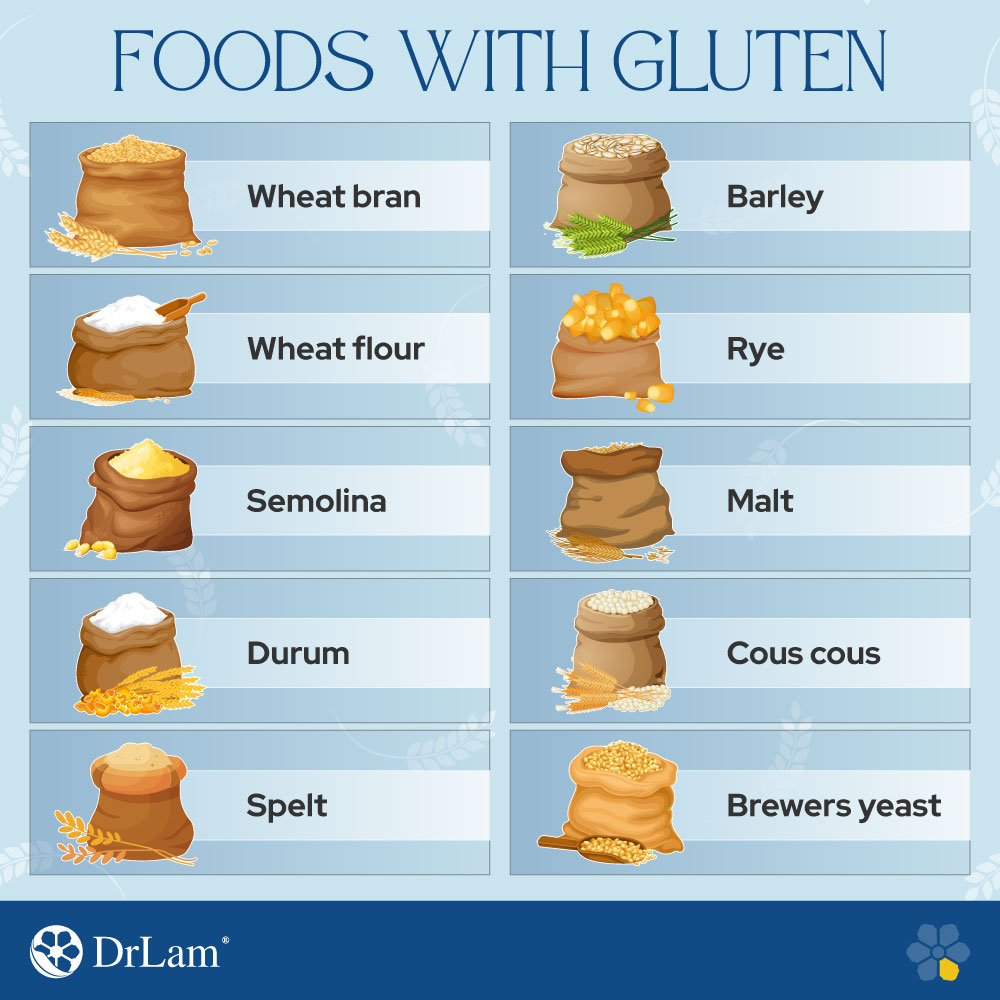
Which Foods Contain Gluten?
If you are following an elimination diet to determine whether you have a gluten intolerance or you are experiencing gluten intolerance, it’s important to know which foods contain gluten.
Food ingredients that contain gluten include:
- Wheat bran
- Wheat flour
- Semolina
- Durum
- Spelt
- Barley
- Rye
- Malt
- Cous Cous
- Brewers yeast
These ingredients are also often used in the preparation of food items. Some common food items that contain gluten are:
 Bread- including all wheat-based breads made from the grains above
- Pasta – unless it is made from lentils or legumes or says gluten-free on the label
- Cereals- most cereals unless it says gluten-free
- Baked goods
- Cakes
- Cookies
- Muffins
- Snacks:
- Crackers
- Pretzels
- Muesli bars
- Sauces:
- Soy
- Teriyaki
- Hoisin
- Salad dressings
- Some marinades
- Beverages
- Beer
- Some flavored alcoholic beverages
- Processed meats
- Pizza
- Some broths
- Prepackaged convenience food, unless labeled gluten-free
- Some medications, vitamins, minerals, and other supplements
If you aren’t sure whether a product contains gluten or not, checking the label can help.
Gluten In Different Countries
An interesting aspect of gluten that not many are aware of is that gluten-containing foods can be different worldwide. For example, there are varieties of wheat in Europe that are lower in gluten compared to the US. This can result in some individuals being able to eat certain gluten foods such as wheat in Europe. However, if you are traveling to Europe and would like to try gluten-containing foods such as wheat, check with your healthcare provider first.

What Can I Eat With Gluten Intolerance?
It’s common for individuals with gluten intolerance to feel like most starches are off the table. However, there are many starches that are gluten-free. These include:
- Rice
- Sorghum
- Tapioca
- Quinoa
- Potato
- Corn
- Millet
- Flax
- Chia
Oats are another food item that is generally gluten-free. However, if the oats are flavored, there is a chance that the flavoring will contain gluten. Additionally, if oats are produced in a factory that uses gluten, there is a chance of contamination. It’s important to find oats labeled gluten-free.
There is also a wide range of foods that traditionally contained gluten now being produced gluten-free. These include breads, crackers, pretzels, and many other foods. These foods will generally be labeled as gluten-free.
Can Supplements Help With Gluten Intolerance?
If you are gluten intolerant, following a gluten-free diet can help to reduce and prevent symptoms. However, following this diet can be tough, and it can be tough to avoid gluten-free foods completely. Additionally, there may be gluten-containing foods that you would like to still have occasionally. Digestive enzymes can come in handy here.
These supplements contain digestive enzymes that may help assist with the digestion of gluten and may help to ease symptoms. A study in 2018 researched the effect of gluten-digesting enzymes in NCGS and found that there was an improvement in symptoms (4).
Glutelyze by Dr. Lam is a digestive supplement that contains a variety of different digestive enzymes, with some of the enzymes being the same as those used in the 2018 study. These enzymes help break down various components that are found in cereals and grains.
For optimal results, it is recommended that you have one vegetarian capsule at the beginning of a meal that contains gluten. This makes it important to still be aware of which foods contain gluten.
Takeaway Message
 Gluten intolerance is a condition that is becoming more prevalent. However, strategies such as reducing foods containing gluten and using digestive enzymes if necessary can help to manage and prevent symptoms.
If you are concerned that your stress is the cause of your gluten intolerance, the Dr. Lam Nutritional Adrenal Fatigue Recovery Program may assist. This program can help you to heal from adrenal fatigue and can help you to reduce inflammation in your body and heal your gut. Doing so may help with food sensitivities such as gluten intolerance. This program includes educational resources as well as a 30-day meal plan, a recipe book, and a personal nutritional consultation that can help you to focus on healing your gut. If you are interested in this program, you can click here for more information.