

 Most people experience times when they feel exhausted or run down. Work pressure may leave them feeling like this, or a life with many responsibilities you constantly need to take care of. Many people, during these times, may also experience a candida flare-up. But did you know about the correlation between adrenal fatigue and candida?
Adrenal health is largely dependent on a healthy immune system. Similarly, immune health largely depends on the health of your gastrointestinal tract. But your digestive health also shares a strong link with your adrenal health. These three systems work together to keep you healthy. And when one of these three experiences a problem, it affects the other two. If adrenal fatigue affects your immune system, it can open the way for a candida flare-up.
In this way, adrenal fatigue and candida flare-ups have a close connection.
Explaining Adrenal Fatigue
Adrenal fatigue is a condition that results in over-taxed adrenal glands due to an increase in cortisol production over a long period. Many people have no idea they have this condition because of the many possible symptoms that could arise. Often, doctors address symptoms only, without the root cause ever being addressed. This could lead to years of dealing with ever-worsening yet disparate health issues that never get resolved. The link between adrenal fatigue and candida is one such issue.
So what causes adrenal fatigue?
The Hormones You Need to Know About
The main cause of adrenal fatigue is stress. This stress could result from diverse sources. These include psychological stress due to issues at work or home, exposure to environmental toxins like pollution, chemicals sprayed on the foods you eat, eating processed foods or a diet high in sugar, physical injuries sustained in an accident, and the list goes on.
Adrenal function has a huge impact on your body’s hormone production. Although the adrenals make numerous hormones, we need to mention three, namely:
- Cortisol
- Adrenaline
- Aldosterone
Cortisol
Cortisol plays a key role in liver, pancreas, adipose tissue, and muscle function. It also influences the respiratory, cardiovascular, immune, nervous, and reproductive systems.1 Furthermore, during times of stress, your Hypothalamic-Pituitary-Adrenal (HPA) axis, which sends chemical messengers to activate your NeuroEndoMetabolic (NEM) stress response, results in increased cortisol production in the adrenals.
This increased cortisol production, essential for survival, puts your entire body in a state of high alert. Certain functions may reduce their activities, while others may shut down entirely. Examples include your digestive system and sex hormone production. At the same time, other activities may increase in intensity. This is due to an increased release of blood glucose from the liver. This increase in blood glucose levels also affects brain function. You may experience increased clarity of thought and enhanced concentration ability.
Adrenaline
Another key player during a NEM stress response activation, adrenaline prepares your body to react during the fight or flight response in various ways. It:
- Increases your heart rate so that more oxygen reaches your muscles.
- Constricts your blood vessels so that blood flows from areas deemed non-essential for immediate survival and instead flows to areas occupied with the fight or flight response.
- Releases glucose into your bloodstream so that your body has the energy needed to react to the situation.
- Makes breathing easier by relaxing the muscles in your airways.
- Increases cognitive function during stressful periods.
Aldosterone
This hormone helps to maintain your blood volume. It regulates the amount of salt in your blood at any given time. In so doing, it helps to control blood pressure levels while also helping to avoid dehydration.
Adrenal Fatigue
 When you experience prolonged stress, your adrenal glands, due to the constant demand by the NEM stress response, will try to produce increasingly high quantities of stress hormones. This could eventually deplete your body of the resources it needs to make these and other essential hormones. In the long run, the result is myriad health conditions. These include gastrointestinal and heart issues, blood pressure issues, increased blood sugar issues, and many others.
You may also start to experience issues with libido and fertility due to very low levels of sex hormones. Gastrointestinal issues could include diarrhea, constipation, and issues with gut flora imbalances – hence the link between adrenal fatigue and candida. You may also experience a compromised immune system and the rise of systemic inflammation.
As adrenal fatigue progresses, you may see an increase in new symptoms, while older symptoms may intensify in severity. The latter stages of the condition may leave you bedridden and need constant care as you lose the ability to function independently.
Adrenal Fatigue and Candida: The Hormonal Link
One of the symptoms of adrenal fatigue is hormonal imbalance. This imbalance, usually resulting from stress, sees an increase in stress hormone production and a decrease in the production of other hormones. This may often lead to estrogen dominance because the body does not produce enough progesterone.
Estrogen promotes the growth of candida because it reduces your epithelial cells’ ability to fight candida overgrowth. Epithelial cells cover your entire body, both internally and externally. They have a protective function.
What Is Candida
Candida is a yeast infection. The most common parts of the body to experience this type of infection include the mouth, vagina, and intestinal tract. We normally associate this condition with a compromised immune system. In rare cases, candida may spread to other parts of the body. This includes the membranes lining the heart or brain and your blood. If this happens, we refer to the condition as invasive candidiasis. This is the most common fungal infection picked up during hospital stays.2
Stress can lead to an imbalance in your gut flora and pH levels. When this happens, you may find candida yeasts growing out of control. If left unchecked, they may contribute to the formation of irritable bowel syndrome (IBS) because they attack the gut lining and penetrate your bloodstream. This means people with candida overgrowth may find themselves suddenly having food sensitivities or developing new allergies.
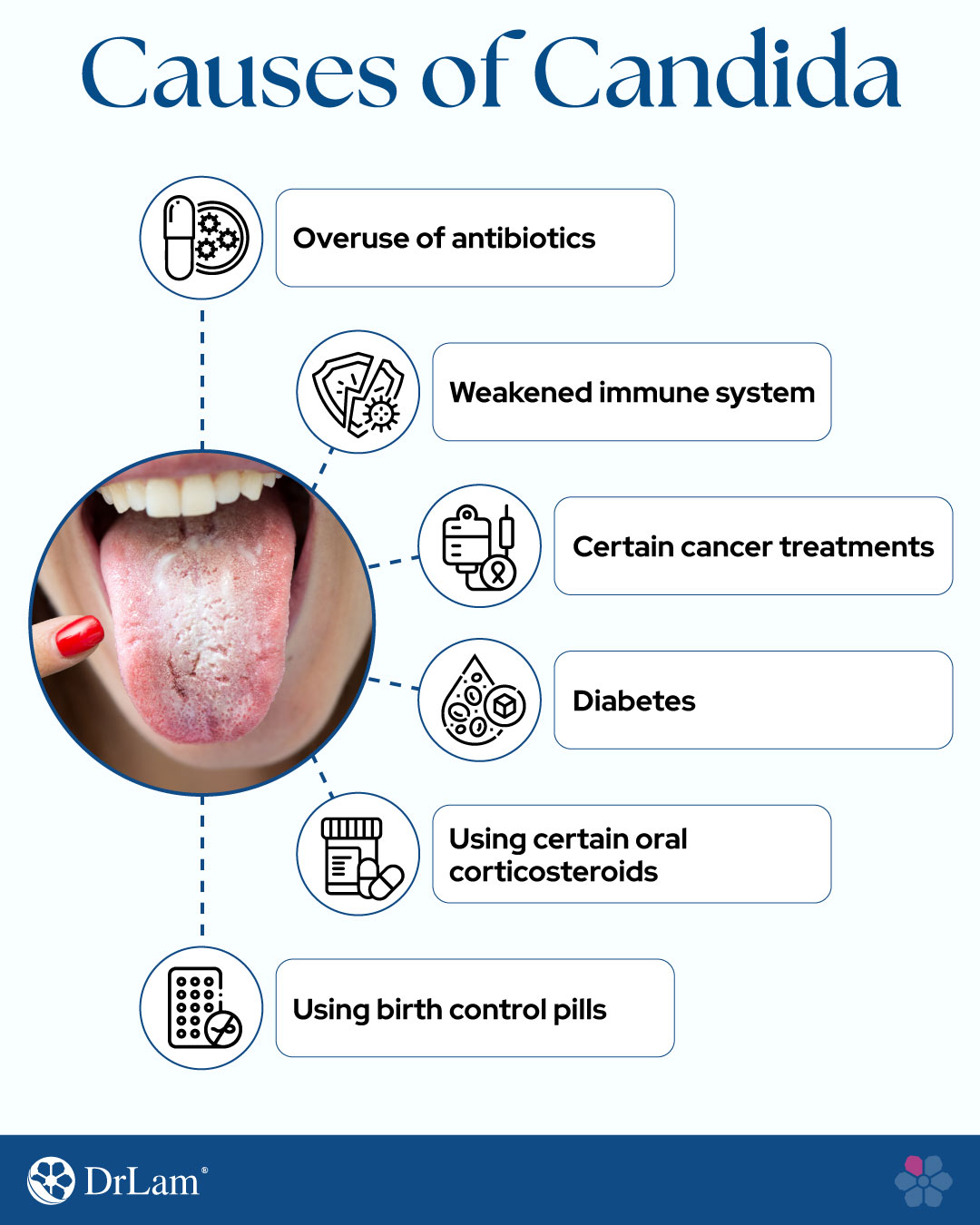
Causes of Candida
There are several possible causes of candida overgrowth, including the following:
- The overuse of antibiotics that kill off both good and bad bacteria.3
- A weakened immune system, especially if you suffer from an inflammatory or autoimmune disorder.
- Certain cancer treatments, as both chemotherapy and radiation therapy can kill off the healthy bacteria in your gut that fight candida.
- Diabetes, as higher blood sugar levels in the mouth and other membranes can lead to a higher chance of developing candida because sugar feeds yeast.
- Using certain oral corticosteroids, such as those used to manage asthma, could stimulate candida growth.
- Many women using birth control pills report an increased risk of candida, which tends to disappear after they stop using them.
Candida Symptoms
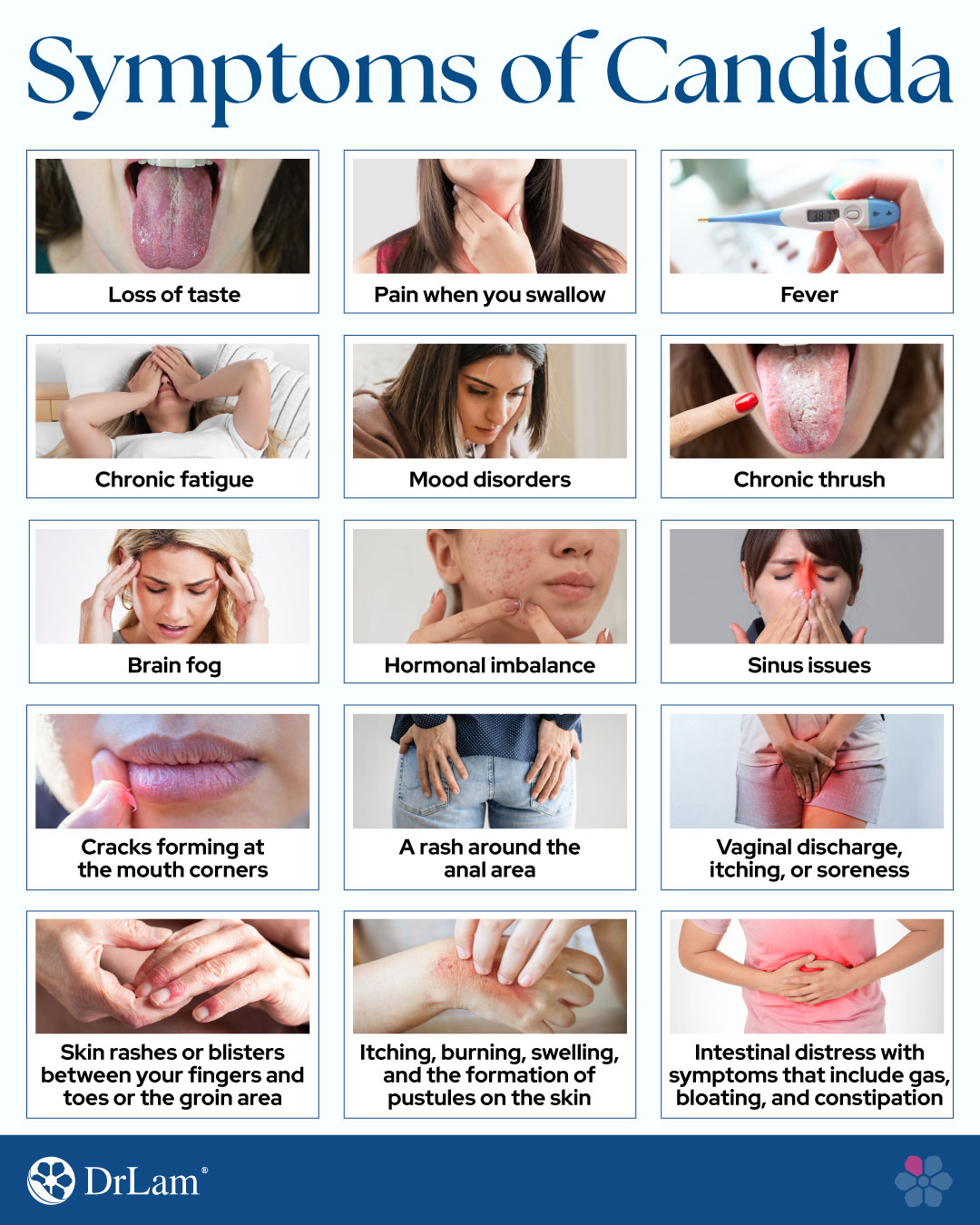
Candida can present many symptoms. These include:
 Loss of taste
- Pain when you swallow
- Cracks forming at the mouth corners
- Skin rashes or blisters between your fingers and toes or the groin area
- Itching, burning, swelling, and the formation of pustules on the skin
- A rash around the anal area
- Vaginal discharge, itching, or soreness
- Fever
- Chronic fatigue
- Mood disorders
- Chronic thrush
- Brain fog
- Intestinal distress with symptoms that include gas, bloating, and constipation
- Hormonal imbalance
- Sinus issues
Please note that people with adrenal fatigue experience many of these symptoms even without candida overgrowth.
Additional Adrenal Fatigue and Candida Links
Inflammation is your immune system’s response to stress. The increased release of cortisol, however, helps suppress this inflammatory response so that your body has the strength it needs to fight a stressor. As you progress through the stages of adrenal fatigue, however, your adrenal glands may no longer be in a position to produce the cortisol your body needs.
As your adrenal glands start producing less cortisol, even though your body is in a state of stress, you may see an increase in your inflammatory response. Inflammation may become chronic. This may also encourage an increase in candida production because your body cannot fight it.
This candida overgrowth puts added stress on your body. It is an infection that your immune system’s inflammatory response wants to tackle. This puts even more pressure on your adrenals, which, at this point, may find themselves in a state of fatigue. They struggle to keep up with the stress hormone demand put on them by the NEM stress response.
So, what does this mean?
Simply put, adrenal fatigue and candida share many similar symptoms. Also, adrenal fatigue may increase your risk of developing candida. At the same time, a candida breakout may act as a stressor that worsens your adrenal fatigue and corresponding symptoms.
Be Aware of Potential Candida Die-Off Reactions
It is important to note that if you start addressing adrenal fatigue and candida die-off occurs, your symptoms may worsen. Candida die-off starts when you begin addressing this yeast infection. Antibiotic medications specifically targeting candida may cause the yeast to weaken and start to die, and you could experience unpleasant side effects. This is because candida die-off creates toxic by-products.
These toxic by-products can affect you in many ways. They can interfere with your cognitive function as well as your endocrine, immune, and respiratory systems and negatively affect your red blood cells. On a brighter note, candida die-off symptoms only last a few days.
How to Deal With Adrenal Fatigue and Candida
There are several natural solutions for addressing both adrenal fatigue and candida.
Reduce Your Stress to Manage Adrenal Fatigue and Candida
Stress is one of the main culprits for causing adrenal fatigue and candida to develop. Reducing your stress thus makes sense. For mental stress issues, going for walks, relaxing whenever possible, or taking up new hobbies may help. You can also try gentle exercises like tai chi, yoga, and Pilates, which may also help bring stress levels down.
However, note that if you have later-stage adrenal fatigue, you should avoid vigorous forms of exercise, as they require the body to produce more cortisol and may add to your adrenal burden if you have adrenal fatigue and candida.
Sauna to Get Rid of Toxins
The heat from a sauna helps to open your pores so that toxins can be eliminated from your body through your skin. It also stimulates your blood circulation so that toxins and other foreign pathogens can move through your bloodstream and to the liver. There, your liver will process them and get rid of them through normal excretory processes.
Diet for Adrenal Fatigue and Candida
 A liquid-only diet consisting of, for example, an organic vegetable broth may have a cleansing effect on the body as it may help get rid of toxic buildup. Eating plenty of steamed, organic vegetables may have a similar effect. You would only need to do this type of diet for three to five days if adrenal fatigue and candida toxin build-up are the issues. You should also eliminate sugars, starches, grains, and fruit from your diet.
Once rid of these toxins, following an adrenal fatigue diet will provide your adrenal glands with the support they need. This type of diet advocates for the use of healthy fats like olive oil, plenty of vegetables, lean red meat, poultry, and fatty fish. Examples of fatty fish include cod, sardines, and salmon. These fish are high in omega-3 fatty acids that help with cellular function and promote brain, eye, and heart health.
Supplements for Adrenal Fatigue and Candida
You can also explore the use of various supplements to help with adrenal fatigue and candida. FloraCleanse is a good option. This supplement provides promotes a healthy gut bacteria balance with the use of black walnut, oregano oil, and caprylic acid, thereby helping to address both adrenal fatigue and candida.
You could also try:
- Ashwagandha, which has stress-relieving properties
- Vitamin C, a strong antioxidant that supplies immune support
- B vitamins because they support your body’s energy production and help you cope with stress
- Milk thistle, a natural herb that supports liver health and detoxification
- Coconut oil, whether ingested or applied topically, helps to kill off candida because it contains lauric acid and caprylic acid
- Both clove oil and oregano oil have antiparasitic and antifungal properties that can kill candida
Please note that you should talk to your healthcare provider before using supplements or other natural solutions. They are best able to determine their suitability and dosage, taking your health history into account.
In Closing
There is, unfortunately, a close correlation between adrenal fatigue and candida, with people with adrenal fatigue having a more likely chance of contracting this fungal infection. This could result from hormonal imbalances experienced by adrenal fatigue sufferers as well as gut dysbiosis and other health issues associated with the condition.
A holistic approach to dealing with these issues may help provide relief. Following the Adrenal Fatigue Recovery Program may help you to deal with both these issues. The program is designed specifically for those suffering from adrenal fatigue and its many symptoms.